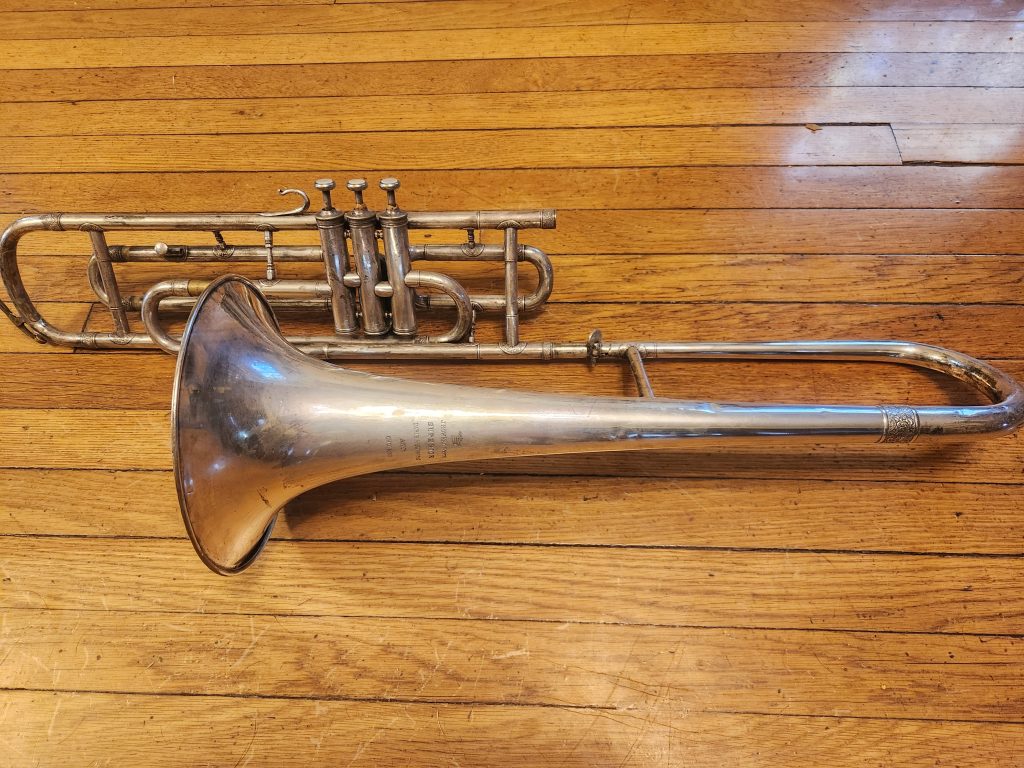
 John Howard Foote, a Connecticut boy, began an instrument business in New York City in 1857, with various partners, including J. F. Stratton; in 1864 the firm was Stratton & Foote…importers & manuf of musical instruments. In 1868 Foote added a Chicago store.
An 1888 article says that “the NY store covers six floors and is the oldest and largest store in the country. They sell brass instruments, violins, flutes, cellos, guitars & banjos. They are the sole US supplier for Courtois and the sole maker for the “Challenge” and J. Howard Foote “Superior” brands of light piston band instruments”.
It seems that Foote was primarily (or exclusively) an importer and dealer, not a manufacturer. The above mentioned Antonie Courtois was one of the finest French manufacturers of the day; those instruments in Foote catalogues for whom a manufacturer can be identified are all by Courtois, but other sources seem possible.
The firm was formally incorporated as J. Howard Foote, Inc. in 1897, a year after John died, but instruments could have been stamped with that name a good deal earlier. The firm was liquidated in 1904. (Thanks to Horn-u-Copia for much of the history.)
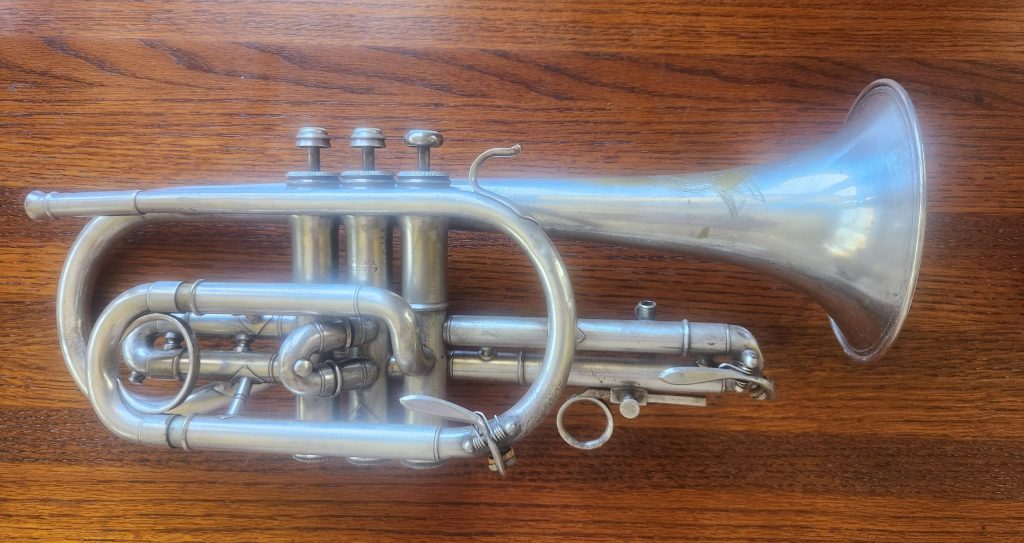 Here’s a cornet stamped” Buescher TrueTone, made in Elkhart, Indiana”; serial number gives a date of 1942. Details such as flares at top and bottom of valves give a distinctive 1940s feel.
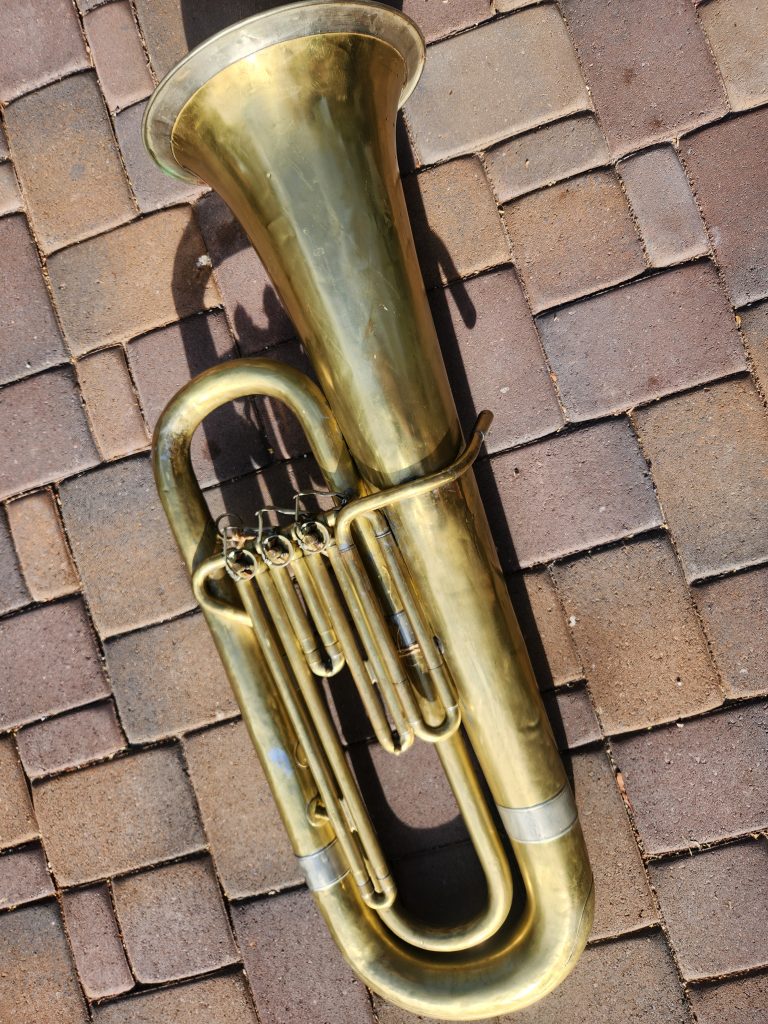 A top action, string rotary valve e-flat tuba, remarkably conical with a large throat and small bell, producing a rich sound. A tiny stamp on the bell reads ”Seefeldt Musical Inst. Manuf. Co., Philadelphia“. I cannot find enough of a serial number list to give any indication of date of manufacture.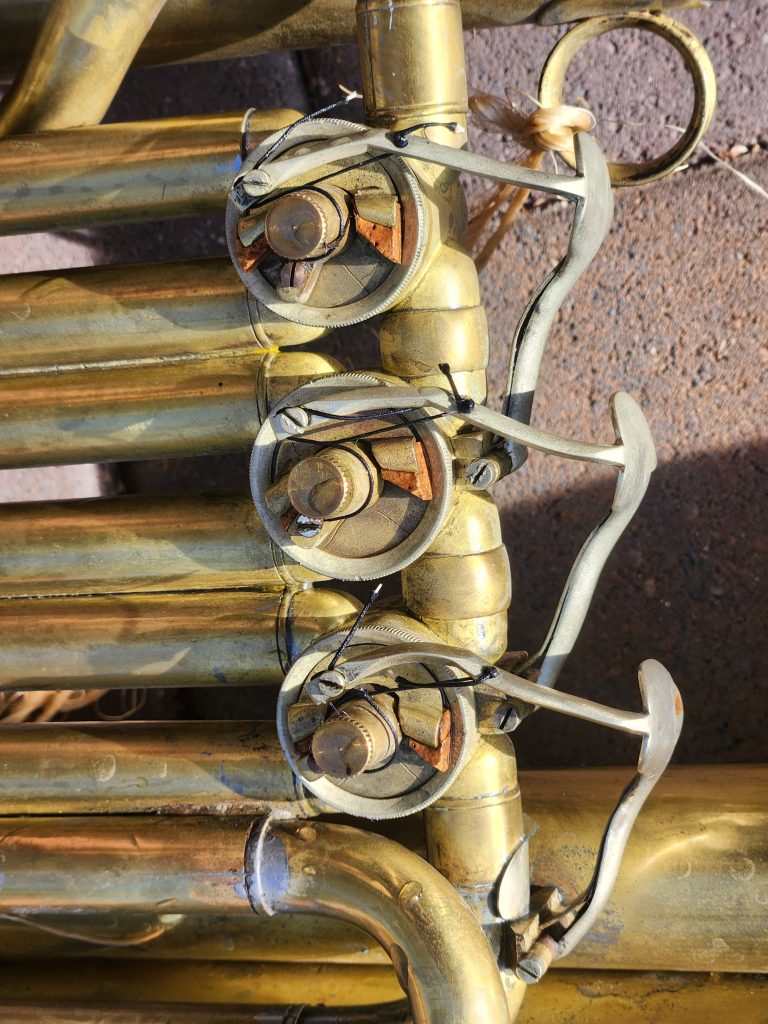
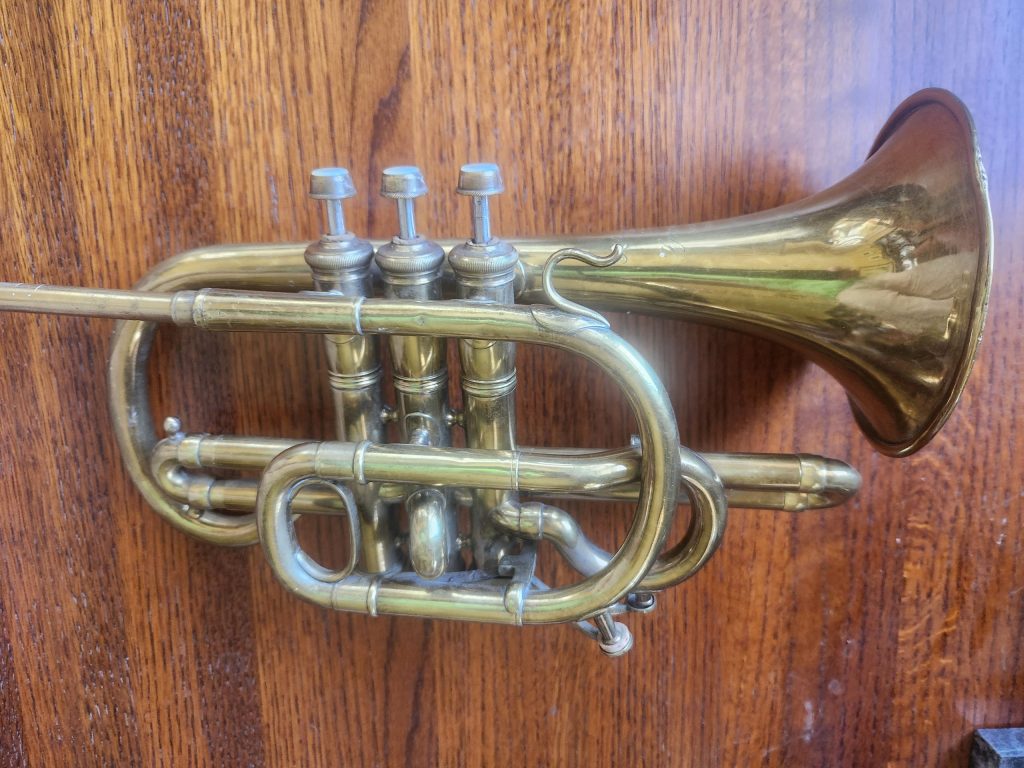 . The 1896 Lyon & Healy catalogue lists it with picture, likely with French piston valves.
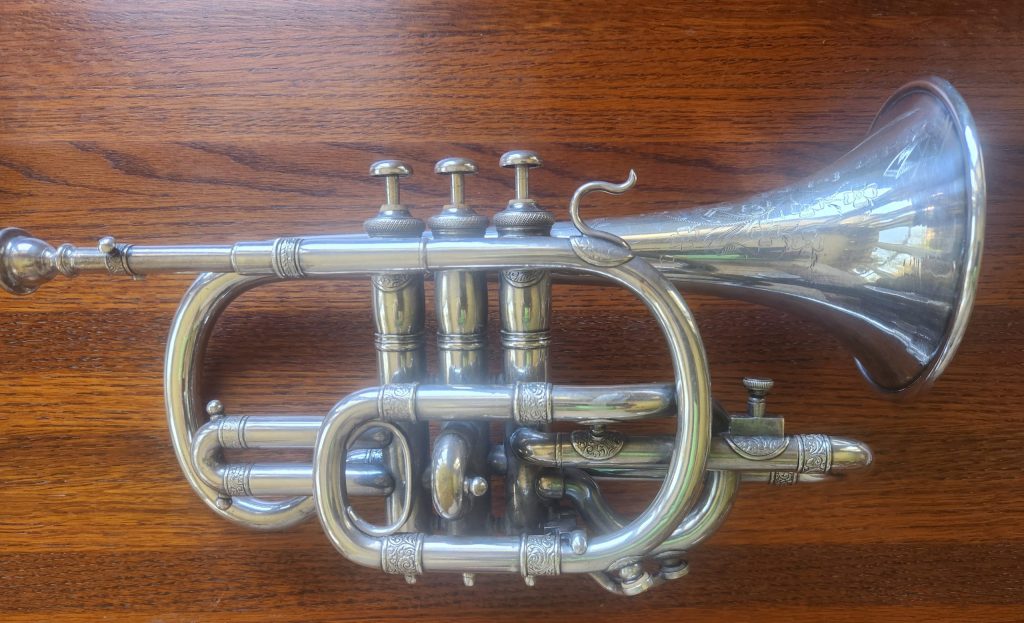 Beautiful B-flat cornet, stamped Beau-Ideal, Chicago. Beau-Ideal was a trade name used by Lyon & Healy for their French imports, I understand generally the ones of higher quality. Silver plate is intact save for a bit of wear at the end of the second valve slide. Dual water keys and an aggressive shepherd’s crook; ornate engraving on mounts and bell. Intact and original. No serial number.